
MF Doom™
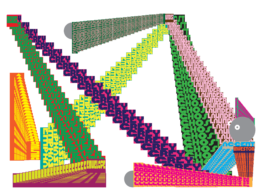
Named by Instagram poll. The rapper borrowed his name from a Marvel villain, and we borrowed ours from the internet. The MF prefix was already ours. MF Doom starts with one question: what happens to a sheared corner when the letter changes width? Every character is cut with angled corners tied to the glyph itself, so the cuts stretch and compress with the letter instead of sitting on it as a fixed detail. At full width the result is monolithic plating, a face built to be seen from across a room. Pulled narrow, the same cuts crowd together and the personality changes with them. Same mask, different alias. One axis, and the whole character moves along it. Alternate stylistic forms and [language support] are included, none of which require removing the mask. 7 static styles. 1 variable font.
Type Tester
Examples
CCCCCCC
Doctor Doom is a supervillain appearing in American comic books published by Marvel Comics. Created by artist Jack Kirby and writer-editor Stan Lee, the character first appeared in The Fantastic Four #5 (cover dated July 1962), with his full origin story following two years later in Fantastic Four Annual #2 (1964). Shortly after his creation, Doom became one of Marvel's most widely used villains, appearing across titles including The Avengers, The Amazing Spider-Man, and Iron Man within his first decade. He is considered the archenemy of the Fantastic Four.
Doctor Doom is the self-proclaimed moniker of Victor Werner von Doom, the monarch of the fictional country of Latveria, located in Central or Eastern Europe. Born to a Latverian healer and a Romani witch, Doom spent his life mastering both science and sorcery, and seeks to bring order to humanity through world domination and prove his intellectual superiority over Mister Fantastic—his old college rival and the leader of the Fantastic Four—whom he blames for his disfigurement in a laboratory accident. Doom wears a metal mask to conceal his scarred face and a magically forged suit of armor that grants him superhuman strength, flight, and high-tech weaponry.
His command of dark magic and the mystic arts imbues him with abilities ranging from energy projection to spell casting, while his diplomatic immunity as head of state shields him from prosecution for crimes committed outside Latveria. The character was conceived by Kirby as a figure of approaching death (entirely encased in metal and stripped of human mercy) and by Lee as a study in arrogance as its own undoing. Early Doom stories functioned as Cold War allegories, with scholars comparing his rule of Latveria to leaders such as Josip Broz Tito,[citation needed] while later stories have used him to comment on the War on terror and described him as a stand-in for Saddam Hussein.
Major Doctor Doom stories include the "Unthinkable" arc in Fantastic Four (2003–2004), in which he imprisons Mister Fantastic in a magical dimension, and Books of Doom (2005–2006), a retelling of his origin written by Ed Brubaker. Doom is a central figure in the company-wide Secret Wars (2015) event, in which he claims godhood over a reconstructed multiverse before Mister Fantastic defeats and temporarily redeems him, causing him to briefly adopt the Iron Man persona in the Infamous Iron Man series (2016–2018), before returning to villainy and headlining the "One World Under Doom" (2025) crossover event. While his primary obsession is the Fantastic Four, Doom has also fought other heroes, including Spider-Man, Iron Man, Doctor Strange, Black Panther, the X-Men, and the Avengers.
The character has been listed as one of Marvel's most notable villains and among the greatest comic book villains ever created. He has been listed as among the most visible Romani characters in mainstream superhero comics. Doom's likeness has been featured on merchandise such as clothing and collectible items, and been adapted in various media incarnations, including films, television series, and video games. Most notably, Julian McMahon, Toby Kebbell, and Robert Downey Jr. have portrayed the character in live-action. The character also inspired rapper MF DOOM's stage persona.
Doctor Doom does not beg.
REGULAR
My greatest weapon is my matchless mind.
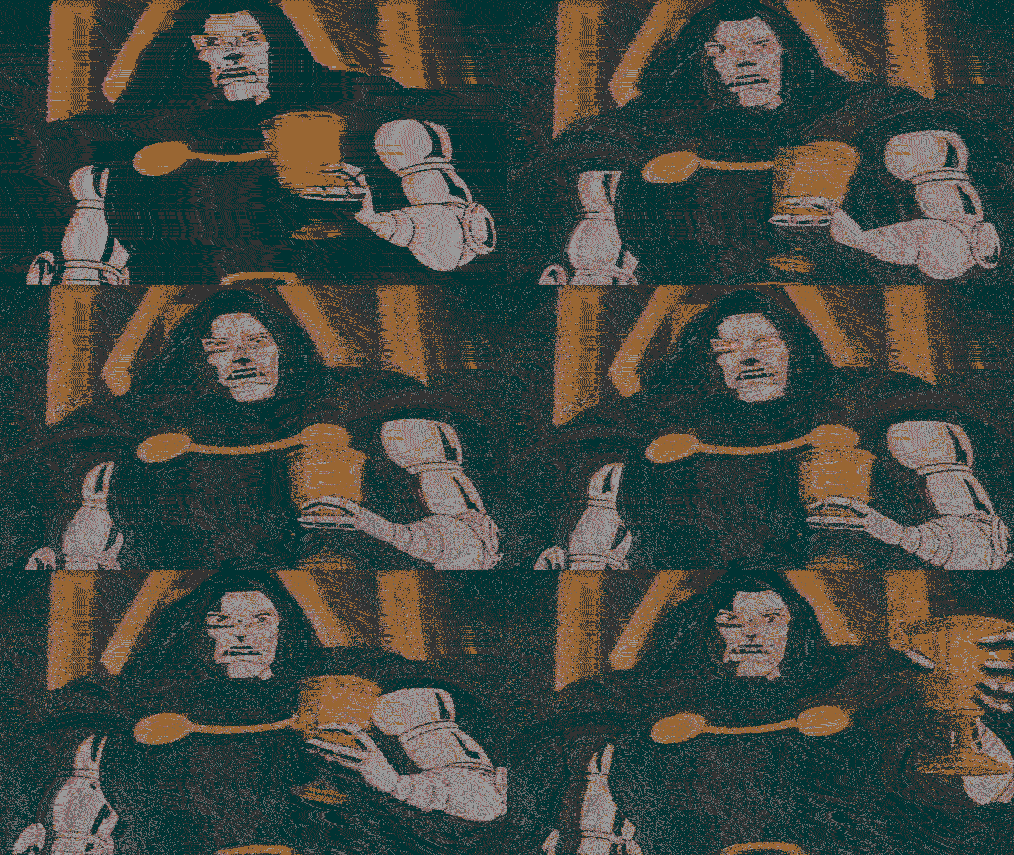
In Latveria we have no lawyers. Only corpses.
Like many of Marvel's Silver Age characters, Doctor Doom was conceived by Stan Lee and Jack Kirby. With the Fantastic Four title performing well, Lee and Kirby were trying to dream up a "soul-stirring...super sensational new villain" for the series.[1] Looking for a name, Lee latched onto "Doctor Doom" as "eloquent in its simplicity — magnificent in its implied menace".[1]
Kirby stated in a 1987 interview: "Dr. Doom was the classic conception of Death, of approaching Death. I saw Dr. Doom as The Man in the Iron Mask, who symbolized approaching Death. It was the reason for the armor and the hood. Death is connected with armor and inhuman-like steel. Death is something without mercy and human flesh contains that element of mercy. Therefore, I had to erase it, and I did it with a mask."[2] Kirby drew his interpretation of what Doom would look like under the mask, giving Doom only "a tiny scar on his cheek". Due to this slight imperfection, Doom hides his face not from the world, but from himself.[3] To Kirby, this is the motivation for Doom's vengeance against the world; because others are superior due to this slight scar, Doom wants to elevate himself above them.[4]
Kirby further described Doom as being "paranoid", wrecked by his twisted face and wanting the whole world to be like him.[5] Kirby went on to say that "Doom is an evil person, but he's not always been evil. He was [respected]...but through a flaw in his own character, he was a perfectionist."[4] Stan Lee's writing typically showed Doom's arrogance as his constant downfall, and how his pride leads to von Doom's disfigurement at the hands of his own machine, and to the failures of many of his schemes.[6]
In the book Superhero: The Secret Origin of a Genre, Peter Coogan writes that Doom's original appearance was representative of a change in the portrayal of "mad scientists" to full-fledged villains, often with upgraded powers.[7] These supervillains are genre-crossing villains who exist in adventures "in a world in which the ordinary laws of nature are slightly suspended"; characters such as Professor Moriarty, Count Dracula, Auric Goldfinger, Hannibal Lecter, Joker, Lex Luthor, and Darth Vader, also fit this description.[7] Comic book critic Peter Sanderson also found traces of William Shakespeare's characters Richard III and Iago in Doom; all of them "are descended from the 'vice' figure of medieval drama", who address the audience in monologs detailing their thoughts and ambitions.[8]
The character first appeared in The Fantastic Four #5 (cover dated July 1962), roughly midway between the Checkpoint Charlie standoff of October 1961 and the Cuban Missile Crisis the following October.[9][10][11] It marked the point where the creators shifted from the monster genre to the superhero genre, and it was their first attempt at creating a lasting supervillain.[11] In the issue, Doom is introduced as a peer of Mister Fantastic's who has been facially scarred by a scientific experiment, learned magic in Tibet, and established control of his home country, Latveria; the character re-appears in the following issue, briefly allying with Namor.[10] Doom appears again in issue #10 (January 1963); Ben Saunders says that this is the best early Doom story, establishing the character as Mister Fantastic's "Jungian shadow or distorted double."[12]
He also appeared in The Amazing Spider-Man #5 (October 1963).[13] Due to the rush to publish, the character was not given a full origin story until Fantastic Four Annual #2, two years after his debut.[14] The story establishes that Doom was born to a Romani family in Latveria, a small kingdom in the Alps, experienced persecution, but eventually became its undisputed leader. Saunders describes the story as transforming the character "from a malignant sci-fi warlock into a more complex figure: although narcissistically wounded and vengeful, he displays a sense of responsibility for his people, and a warped code of honor."[15] In Fantastic Four #57-60 (December 1966 - March 1967) Doom steals the power of the Silver Surfer.[16]
aABbCcDdEeFfGgHh
IiJjKkLlMmNnOoPp
QqRrSsTtUuVvWw
XxYyZz&@#
MF Doom™
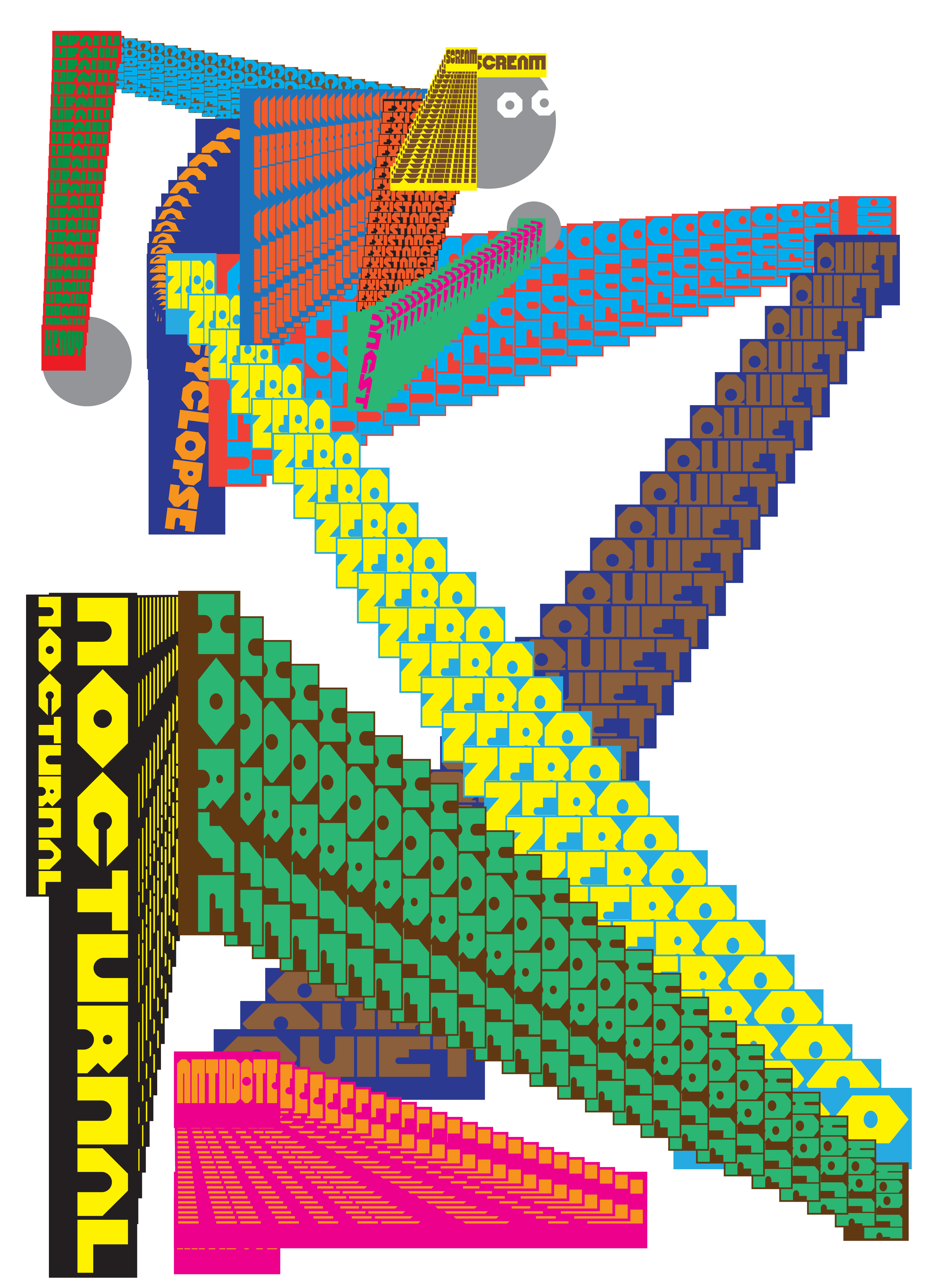
Named by Instagram poll. The rapper borrowed his name from a Marvel villain, and we borrowed ours from the internet. The MF prefix was already ours. MF Doom starts with one question: what happens to a sheared corner when the letter changes width? Every character is cut with angled corners tied to the glyph itself, so the cuts stretch and compress with the letter instead of sitting on it as a fixed detail. At full width the result is monolithic plating, a face built to be seen from across a room. Pulled narrow, the same cuts crowd together and the personality changes with them. Same mask, different alias. One axis, and the whole character moves along it. Alternate stylistic forms and [language support] are included, none of which require removing the mask. 7 static styles. 1 variable font.
Type Tester
Examples
Doctor Doom is a supervillain appearing in American comic books published by Marvel Comics. Created by artist Jack Kirby and writer-editor Stan Lee, the character first appeared in The Fantastic Four #5 (cover dated July 1962), with his full origin story following two years later in Fantastic Four Annual #2 (1964). Shortly after his creation, Doom became one of Marvel's most widely used villains, appearing across titles including The Avengers, The Amazing Spider-Man, and Iron Man within his first decade. He is considered the archenemy of the Fantastic Four.
Doctor Doom is the self-proclaimed moniker of Victor Werner von Doom, the monarch of the fictional country of Latveria, located in Central or Eastern Europe. Born to a Latverian healer and a Romani witch, Doom spent his life mastering both science and sorcery, and seeks to bring order to humanity through world domination and prove his intellectual superiority over Mister Fantastic—his old college rival and the leader of the Fantastic Four—whom he blames for his disfigurement in a laboratory accident. Doom wears a metal mask to conceal his scarred face and a magically forged suit of armor that grants him superhuman strength, flight, and high-tech weaponry.
His command of dark magic and the mystic arts imbues him with abilities ranging from energy projection to spell casting, while his diplomatic immunity as head of state shields him from prosecution for crimes committed outside Latveria. The character was conceived by Kirby as a figure of approaching death (entirely encased in metal and stripped of human mercy) and by Lee as a study in arrogance as its own undoing. Early Doom stories functioned as Cold War allegories, with scholars comparing his rule of Latveria to leaders such as Josip Broz Tito,[citation needed] while later stories have used him to comment on the War on terror and described him as a stand-in for Saddam Hussein.
Major Doctor Doom stories include the "Unthinkable" arc in Fantastic Four (2003–2004), in which he imprisons Mister Fantastic in a magical dimension, and Books of Doom (2005–2006), a retelling of his origin written by Ed Brubaker. Doom is a central figure in the company-wide Secret Wars (2015) event, in which he claims godhood over a reconstructed multiverse before Mister Fantastic defeats and temporarily redeems him, causing him to briefly adopt the Iron Man persona in the Infamous Iron Man series (2016–2018), before returning to villainy and headlining the "One World Under Doom" (2025) crossover event. While his primary obsession is the Fantastic Four, Doom has also fought other heroes, including Spider-Man, Iron Man, Doctor Strange, Black Panther, the X-Men, and the Avengers.
The character has been listed as one of Marvel's most notable villains and among the greatest comic book villains ever created. He has been listed as among the most visible Romani characters in mainstream superhero comics. Doom's likeness has been featured on merchandise such as clothing and collectible items, and been adapted in various media incarnations, including films, television series, and video games. Most notably, Julian McMahon, Toby Kebbell, and Robert Downey Jr. have portrayed the character in live-action. The character also inspired rapper MF DOOM's stage persona.
Doctor Doom does not beg.
REGULAR
My greatest weapon is my matchless mind.
In Latveria we have no lawyers. Only corpses.
Like many of Marvel's Silver Age characters, Doctor Doom was conceived by Stan Lee and Jack Kirby. With the Fantastic Four title performing well, Lee and Kirby were trying to dream up a "soul-stirring...super sensational new villain" for the series.[1] Looking for a name, Lee latched onto "Doctor Doom" as "eloquent in its simplicity — magnificent in its implied menace".[1]
Kirby stated in a 1987 interview: "Dr. Doom was the classic conception of Death, of approaching Death. I saw Dr. Doom as The Man in the Iron Mask, who symbolized approaching Death. It was the reason for the armor and the hood. Death is connected with armor and inhuman-like steel. Death is something without mercy and human flesh contains that element of mercy. Therefore, I had to erase it, and I did it with a mask."[2] Kirby drew his interpretation of what Doom would look like under the mask, giving Doom only "a tiny scar on his cheek". Due to this slight imperfection, Doom hides his face not from the world, but from himself.[3] To Kirby, this is the motivation for Doom's vengeance against the world; because others are superior due to this slight scar, Doom wants to elevate himself above them.[4]
Kirby further described Doom as being "paranoid", wrecked by his twisted face and wanting the whole world to be like him.[5] Kirby went on to say that "Doom is an evil person, but he's not always been evil. He was [respected]...but through a flaw in his own character, he was a perfectionist."[4] Stan Lee's writing typically showed Doom's arrogance as his constant downfall, and how his pride leads to von Doom's disfigurement at the hands of his own machine, and to the failures of many of his schemes.[6]
In the book Superhero: The Secret Origin of a Genre, Peter Coogan writes that Doom's original appearance was representative of a change in the portrayal of "mad scientists" to full-fledged villains, often with upgraded powers.[7] These supervillains are genre-crossing villains who exist in adventures "in a world in which the ordinary laws of nature are slightly suspended"; characters such as Professor Moriarty, Count Dracula, Auric Goldfinger, Hannibal Lecter, Joker, Lex Luthor, and Darth Vader, also fit this description.[7] Comic book critic Peter Sanderson also found traces of William Shakespeare's characters Richard III and Iago in Doom; all of them "are descended from the 'vice' figure of medieval drama", who address the audience in monologs detailing their thoughts and ambitions.[8]
The character first appeared in The Fantastic Four #5 (cover dated July 1962), roughly midway between the Checkpoint Charlie standoff of October 1961 and the Cuban Missile Crisis the following October.[9][10][11] It marked the point where the creators shifted from the monster genre to the superhero genre, and it was their first attempt at creating a lasting supervillain.[11] In the issue, Doom is introduced as a peer of Mister Fantastic's who has been facially scarred by a scientific experiment, learned magic in Tibet, and established control of his home country, Latveria; the character re-appears in the following issue, briefly allying with Namor.[10] Doom appears again in issue #10 (January 1963); Ben Saunders says that this is the best early Doom story, establishing the character as Mister Fantastic's "Jungian shadow or distorted double."[12]
He also appeared in The Amazing Spider-Man #5 (October 1963).[13] Due to the rush to publish, the character was not given a full origin story until Fantastic Four Annual #2, two years after his debut.[14] The story establishes that Doom was born to a Romani family in Latveria, a small kingdom in the Alps, experienced persecution, but eventually became its undisputed leader. Saunders describes the story as transforming the character "from a malignant sci-fi warlock into a more complex figure: although narcissistically wounded and vengeful, he displays a sense of responsibility for his people, and a warped code of honor."[15] In Fantastic Four #57-60 (December 1966 - March 1967) Doom steals the power of the Silver Surfer.[16]
aABbCcDdEeFfGgHh
IiJjKkLlMmNnOoPp
QqRrSsTtUuVvWw
XxYyZz&@#
Metis Digital Type Foundry™
Established in MMXVIII.
Facebooks & Instagrams
Newsletter
Metis Digital Type Foundry is ½ of Modern Type
Info • Commissions • Terms • Contact
Metis Digital Type Foundry™
Established in MMXVIII.
Facebooks & Instagrams
Newsletter
Metis Digital Type Foundry is ½ of Modern Type
Info • Commissions • Terms • Contact